Remote levers play a crucial role in modern mechanical, marine, automotive, and industrial systems by enabling operators to control equipment from a distance with precision and safety. From boats and heavy machinery to vehicles and industrial setups, a remote control lever simplifies operations while improving efficiency and user comfort.
In this detailed guide, we will explore what a remote lever is, how it works, its benefits, applications, and key components.
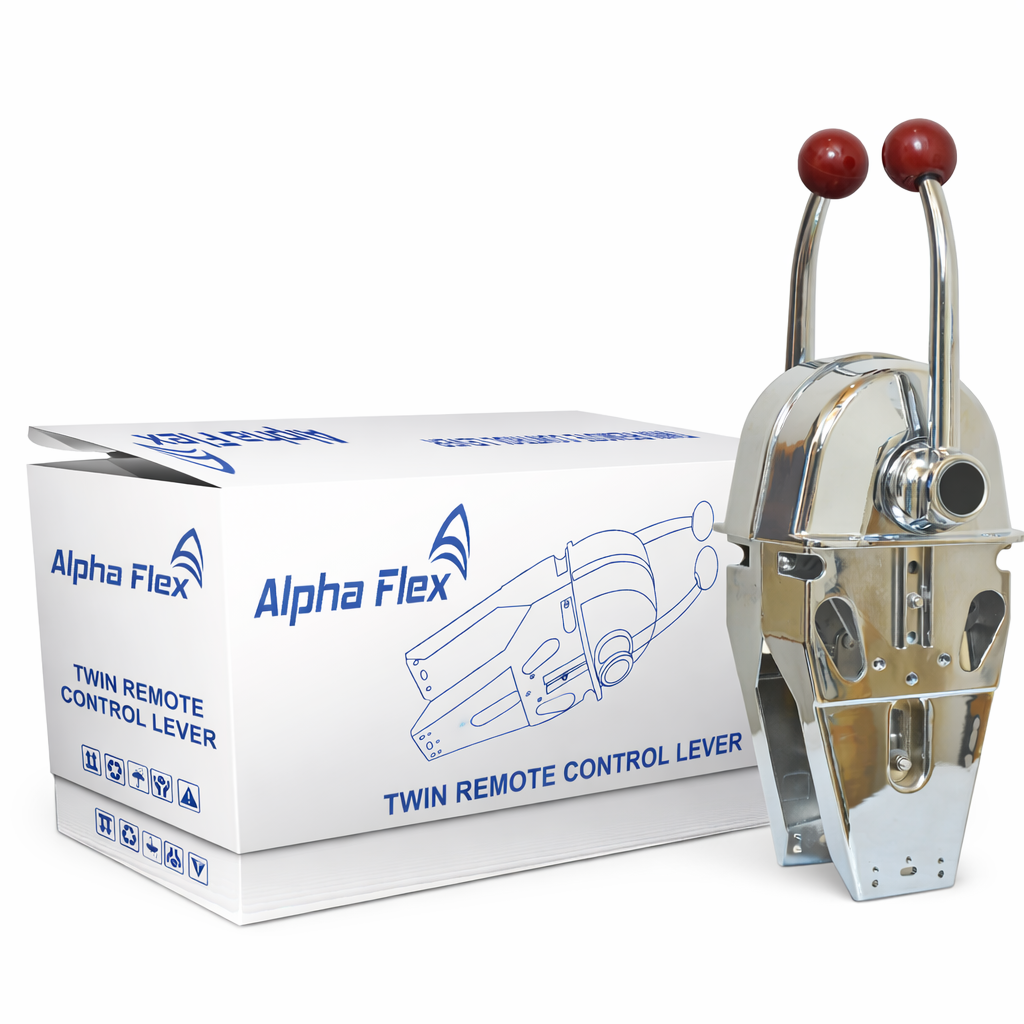
A remote lever is a mechanical or electronic control device that allows an operator to actuate a system or component from a location away from the mechanism itself. Instead of direct physical contact, motion or signals are transmitted using cables, hydraulics, or electronic interfaces.
In marine environments, remote control levers are commonly used for throttle, gear shifting, and steering. In industrial and automotive settings, they control braking systems, hydraulic valves, speed regulation, or specialized functions.
Remote levers are valued for their accuracy, ease of use, and ability to improve operational safety.
The primary function of a remote control lever is to transfer motion or commands from the operator to a mechanical or electronic system. These functions include:
A remote control lever switch is often integrated into the lever assembly, allowing users to activate electrical circuits while operating the lever itself.
A remote lever works by converting physical input into mechanical movement or electrical signals. Depending on the design, this happens in several ways:
In mechanical systems, the movement of the lever is transferred via cables, rods, or linkages to the controlled component. This is common in marine throttle systems and industrial equipment.
In hydraulic systems, lever movement controls fluid flow, which then actuates cylinders or motors. Radio control levers and hydraulic remote levers are widely used in heavy machinery.
Modern systems may use electronic sensors where lever movement sends digital signals to actuators or motors. These systems allow smoother operation and easier integration with automation technologies.
The control lever meaning refers to a device designed to manually regulate or command a machine’s function. Control levers amplify human input, making it possible to operate complex systems with minimal effort.
Remote control levers differ from traditional control levers because they allow operation from a separate location, increasing flexibility and safety.
Remote levers are available in several configurations, each suited for specific applications.
This combines a mechanical lever with an electrical switch, enabling both motion control and circuit activation in one unit.
A remote control lever arm extends leverage and improves mechanical advantage, especially useful in heavy-duty or high-resistance systems.
A radio control lever transmits commands wirelessly, commonly used in advanced machinery, drones, and automated systems.
A remote control handle provides ergonomic grip and precise control, making it ideal for marine and vehicle use.
Designed for rotational control, a remote control knob turner is used where twisting motion is required rather than linear movement.
Remote levers are used across multiple industries due to their adaptability.
Remote levers are essential for throttle and gear control in boats. Marine-grade remote control handles and levers are corrosion-resistant and designed for smooth operation in harsh environments.
In vehicles, remote control handle car systems are used for secondary controls, performance adjustments, and specialty modifications.
A remote control handle bike allows riders to operate accessories or mechanical systems without removing their hands from the handlebars.
Remote levers are widely used in cranes, forklifts, and heavy machinery where operator distance improves safety and control.
Using remote levers offers several advantages:
A remote control handle for advanced ring grip further enhances comfort, especially during prolonged use.
A typical remote lever system includes:
High-quality materials and proper installation ensure durability and smooth operation.
When selecting a remote lever, consider:
Selecting the right remote control knob or handle improves efficiency and reduces wear over time.
To ensure long-term performance:
Routine maintenance extends the life of the remote lever and prevents operational issues.
Remote levers have become indispensable in modern control systems, offering reliability, precision, and safety across industries. Whether it’s a remote control lever switch, a radio control lever, or a specialized remote control handle, these devices enhance functionality while simplifying complex operations.
Below are some frequently asked questions to help clarify common doubts.
Remote control levers transmit operator input to mechanical, hydraulic, or electronic systems, enabling precise control from a distance.
They improve safety, reduce operator effort, enhance accuracy, and allow flexible equipment design.
Remote levers work by transferring motion or signals through cables, hydraulics, or electronics to activate a system.
A control lever is a device used to regulate or command mechanical or electronic operations efficiently.

At AlphaFlex, we believe that sustainability and innovation go hand in hand. Our manufacturing processes are designed to minimize environmental impact, with energy-efficient operations and waste reduction strategies integral to our production ethos.
We invite boat builders, distributors, and marine enthusiasts to partner with AlphaFlex
© 2025 Created by UniSol
WhatsApp us