Engine control cables play a vital role in transmitting mechanical motion from a control lever or pedal to an engine component. Whether used in marine vessels, lawn mowers, industrial machinery, or automotive systems, these cables ensure smooth throttle response, gear engagement, and precise engine operation. In the marine world especially, engine control cables marine systems are critical for safe navigation, speed regulation, and maneuverability.
This guide explains everything you need to know about engine control cables, their meaning, types, applications, and how to choose or measure them correctly.
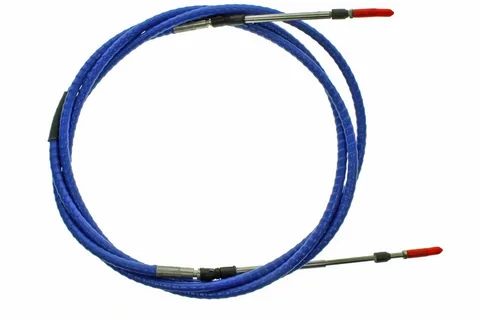
A control cable is a flexible mechanical cable designed to transfer motion or force from one point to another. Unlike power cables, control cables do not transmit electricity; instead, they rely on push-pull or pull-only mechanical action.
In marine applications, engine control cable marine systems connect helm controls to the engine, allowing operators to increase throttle, shift gears, or stop the engine safely from a remote location.
Outside marine use, engine control cable lawn mower setups are commonly used for throttle adjustment, blade engagement, and engine stop controls.
An engine control cable typically consists of:
The inner wire moves linearly inside the casing, transmitting motion accurately while resisting friction, corrosion, and wear.
Because of their durability and flexibility, motor control cables are widely preferred where precise mechanical control is required.
An engine zone control cable is designed to operate within defined mechanical zones of movement. These cables are commonly used in systems where multiple control points exist, such as:
In marine systems, engine zone control cables ensure accurate throttle or gear response without over-travel, reducing the risk of engine damage.
A throttle cable is a specific type of engine control cable that regulates engine speed by controlling the air-fuel intake.
Throttle cables are used across industries, from engine control cable lawn mower systems to large marine propulsion engines. In boats, throttle cables are often integrated into combined throttle-shift control units at the helm.
Marine environments are harsh, with constant exposure to moisture, salt, and vibration. This makes engine control cable marine designs significantly different from standard industrial cables.
Marine engine control cables are commonly used for:
Choosing the right marine-grade cable ensures reliability and safety on the water.
Understanding the difference between these two cable types is essential.
In short, a control cable moves mechanical force, while a communication cable carries information.
This is another common point of confusion.
An engine control cable never replaces a power cable, even though both are essential in engine systems.
Simply put, a control cable is a mechanical link that allows you to control something at a distance. When you pull a throttle lever on a boat or squeeze a lawn mower handle, a control cable is what makes the engine respond.
From engine throttle cables to gear selectors and safety cut-off systems, control cables are fundamental to machine operation.
In lawn mowers and garden equipment, engine control cables are used for:
These cables are usually lighter than marine cables but follow the same mechanical principles. Regular inspection and lubrication are crucial to prevent stiffness or failure.
Correct measurement is essential when replacing an engine control cable marine system.
Most marine cables are sold in standard lengths, so rounding up to the nearest available size is recommended.
An engine connector is the termination point that attaches the control cable to the engine or control lever.
Proper compatibility between the cable and engine connector ensures smooth operation and prevents premature wear.
When selecting an engine control cable, consider:
For boats, always choose marine-grade engine control cable systems designed to withstand corrosion and vibration.
To extend cable life:
Routine maintenance improves safety and performance across all engine types.
Engine control cables are a crucial yet often overlooked component in mechanical and marine systems. From engine throttle cables to engine zone control cables, these systems ensure precise, reliable control over engines and machinery. Understanding their function, types, and correct measurement helps prevent failures and improves overall performance.
Whether you’re working with an engine control cable lawn mower setup or a sophisticated engine control cable marine system, choosing the right cable makes all the difference in safety, efficiency, and long-term reliability.
While both are essential to engine systems, they serve completely different functions. A control cable is a mechanical link that transfers physical motion (pushing or pulling) to regulate things like throttle or gears. In contrast, a power cable is designed to transmit electrical energy to supply power to motors or other electronic devices.
Marine environments are much harsher than standard industrial settings due to salt, constant moisture, and high vibration. Marine engine control cables are specifically engineered with corrosion-resistant stainless steel cores, UV-resistant outer jackets, and low-friction liners to ensure they don’t seize or snap while you are navigating on the water.
When measuring for a replacement, you should measure the length of the outer casing only, rather than the inner wire. It is important to follow the actual routing path the cable takes through the vessel. If your measurement falls between sizes, it is recommended to round up to the nearest available standard length to avoid tight bends or tension.
An engine zone control cable is designed for systems with specific, defined mechanical zones of movement. These are typically used in safety-critical operations or complex setups, such as dual-station controls on a boat or multi-engine vessels, to ensure the engine doesn’t “over-travel” or move beyond its intended mechanical limits.
You should inspect your cables regularly for visible fraying, corrosion, or a cracked outer jacket. Functional signs of failure include a throttle or gear lever that feels “stiff,” “spongy,” or unresponsive. To extend the life of your cables, ensure they are routed smoothly without sharp bends and keep the end fittings clean and lubricated.

At AlphaFlex, we believe that sustainability and innovation go hand in hand. Our manufacturing processes are designed to minimize environmental impact, with energy-efficient operations and waste reduction strategies integral to our production ethos.
We invite boat builders, distributors, and marine enthusiasts to partner with AlphaFlex
© 2025 Created by UniSol
WhatsApp us