
A boat’s throttle response is only as good as its throttle cables. These flexible yet robust control lines connect the helm lever to your engine’s throttle system, allowing smooth acceleration, deceleration, and precise RPM control. If your cables become stiff, worn, or corroded, your throttle can feel unresponsive—or worse, fail completely. That’s why understanding boat throttle cable replacement, sizing, costs, and proper maintenance is essential for every boat owner.
In this detailed guide, we’ll explore everything from boat throttle cable ends and brackets to lubrication tools, extensions, and sizing tips. Whether you’re researching boat throttle cable replacement cost or shopping for new marine control cables, this guide will help you make the right decision for safety and performance.
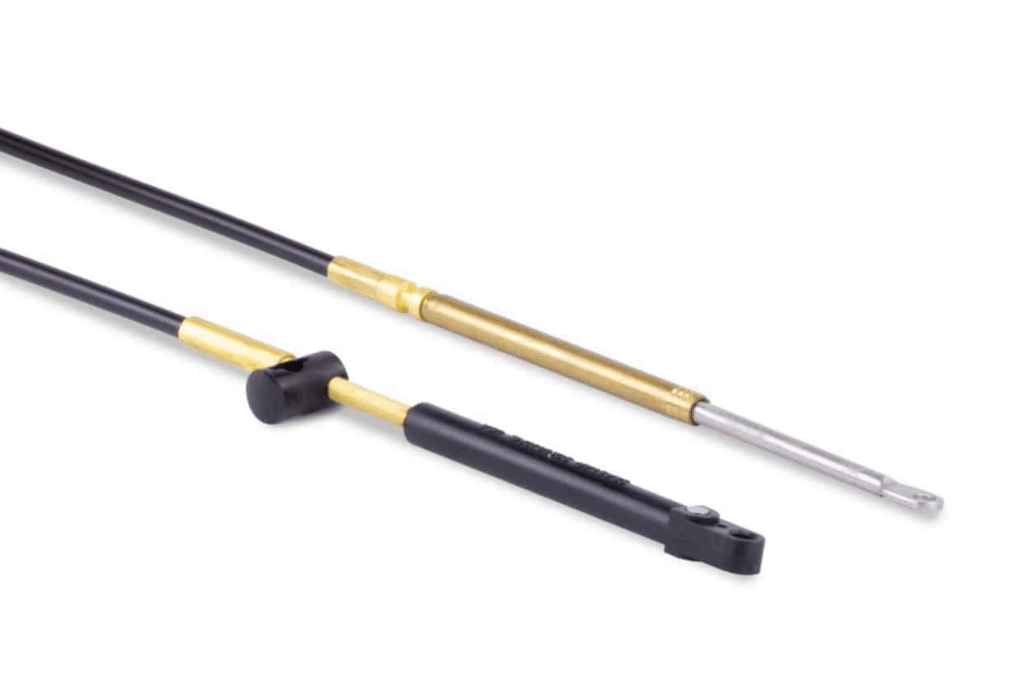
Using the wrong cable can cause stiff throttle movement, premature wear, or even dangerous failure. Always confirm your cable’s compatibility with your specific engine model.
No, not all boat throttle cables are the same. While they may look similar, cables vary in length, cable ends, jacket material, and application type.
A boat throttle cable is the mechanical link that transfers movement from your throttle lever to the engine’s fuel system.
Several key accessories support proper function and longevity of your marine control cables:
Adds extra length for boats with modified layouts or longer helm-to-engine distances. Prevents the need for a full cable replacement in some cases.
When budgeting for boat throttle cable replacement cost, keep these factors in mind:
💰 Typical boat throttle cable price ranges:
Investing in quality cables reduces the risk of mid-season failure and unexpected repair bills.
Boat throttle cable sizes vary mainly in length and core thickness:
Tips for choosing the right size:
Correct sizing ensures crisp throttle response and prevents premature wear.
Regular boat throttle cable lubrication is critical for performance and longevity:
With consistent lubrication, cables last longer and provide smoother boat throttle control.
Throttle cables are just one part of a broader system of marine control cables, which also include:
Together, these cables ensure smooth, reliable control of your vessel. Maintaining them as a set reduces breakdown risk and improves overall handling.
Reliable sources for cables and accessories include:
When buying, always:
Check return policies in case of mismatched sizing
A healthy boat throttle cable is vital for safe, smooth boating. By understanding boat throttle cable replacement cost, parts like brackets, ends, extensions, and lube tools, and the importance of proper boat throttle cable lubrication, you’ll ensure reliable throttle control season after season.
From choosing the correct boat throttle cable sizes to investing in quality marine control cables, proactive maintenance saves money, reduces stress, and enhances safety. If your throttle feels sticky, sluggish, or unresponsive, it’s time to inspect, lubricate, or replace your cables before hitting the water.
No. Throttle cables differ in length, cable ends, construction, and engine application (outboard, inboard, or stern drive). Using the wrong cable can cause stiff movement, poor throttle response, or dangerous failures.
Measure the distance from helm to engine, check the end fittings (threaded, ball joint, clevis, etc.), and confirm compatibility with your engine brand (Yamaha, Mercury, Honda, Suzuki, etc.). When in doubt, consult your engine manual or a marine technician.
Replacement costs typically range from $25–$200+, depending on cable length, quality, and brand. Accessories like brackets, lube tools, or extensions may add extra cost. Investing in higher-quality cables reduces the risk of mid-season failures.
Lubricate before every boating season—or more frequently in saltwater conditions. Always use marine-grade lubricants with a lube tool for deep penetration. Avoid petroleum oils, as they attract dirt and accelerate corrosion.
Common signs include:
Stiff or sticky throttle movement
Delayed engine response
Grinding or squeaking noises
Visible rust, fraying, or corrosion
If you notice these symptoms, inspect and replace your cable immediately.

At AlphaFlex, we believe that sustainability and innovation go hand in hand. Our manufacturing processes are designed to minimize environmental impact, with energy-efficient operations and waste reduction strategies integral to our production ethos.
We invite boat builders, distributors, and marine enthusiasts to partner with AlphaFlex
© 2025 Created by UniSol
WhatsApp us